29.1.2017

British air force in Finland in 1919

The British Campaign in the Baltic 1918–19 was a part of the Allied intervention in the Russian Civil War. The codename of the Royal Navy campaign was "Operation Red Trek". The intervention played a key role in enabling the establishment of the independent states of Estonia and Latvia but failed to secure the control of Petrograd by White Russian forces, which was one of the main goals of the campaign.

Launched in the wake of the Russian collapse and revolution of 1917, the purposes of Operation Red Trek were to stop the rise of Bolshevism, to protect Britain's interests, and to extend the freedom of the seas.

The situation in the Baltic states in the aftermath of World War I was chaotic. The Russian Empire had collapsed and Bolshevik Red Army, pro-independence, and pro-German forces were fighting across the region. Riga had been occupied by the German army in 1917 and German Freikorps and Baltic-German Landeswehr units were still active in the area. Estonia had established a national army with the support of Finnish volunteers and were defending against the 7th Red Army's attack

The Russian Baltic Fleet was the key naval force available to the Bolsheviks and essential to the protection of Petrograd. The fleet was severely depleted after the First World War and Russian revolution but still formed a significant force. At least one Gangut-class battleship, as well as several pre-dreadnought battleships, cruisers, destroyers and submarines were available. Many of the officer corps were on the White Russian side in the Civil War or had been murdered, but some competent leaders remained.

A Royal Navy squadron was sent under Rear-Admiral Edwyn Alexander-Sinclair. 
This force consisted of modern C-class cruisers and V- and W-class destroyers. In December 1918, Sinclair sallied into Estonian and Latvian ports, sending in troops and supplies, and promising to attack the Bolsheviks "as far as my guns can reach". In January 1919, he was succeeded in command by Rear-Admiral Walter Cowan.
                                                                      Sopwith Camel
                                                      British GrainGriffin3

                                                                British Short 184
                                                              Friedrichshafen 33
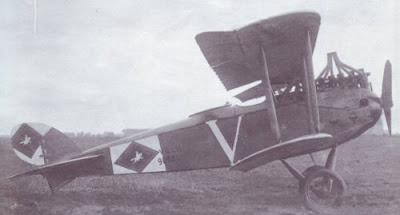
                                        D.F.W C.V   /  Latvian Halberstadt   
                                                    Finnish Friedrichshafen FF 49

British forces denied the Bolsheviks the ability to move by sea, Royal Navy ships bombarded the Bolsheviks on land in support of Estonian and Latvian troops, and provided supplies.

On the night of 4 December, the cruiser HMS Cassandra struck a German-laid mine while on patrol duties north of Liepāja, and sank with the loss of 11 of her crew.

On 26 December, British warships captured the Bolshevik destroyers Avtroil and Spartak, which at the time were shelling the port of Tallinn. Both units were presented to the Estonian Provisional Government and, as Lennuk and Vambola, formed the nucleus of the Estonian Navy. Forty Bolshevik prisoners of war were executed by the Estonian government on Naissaar in February 1919 despite British protests. 

The new Commissar of the Baltic Fleet - Fedor Raskolnikov - was captured onboard Spartak. He was exchanged on 27 May 1919 for 17 British officers captured by the Soviets and later appointed Commissar of the Caspian Flotilla by Trotsky. In the Baltic, Raskolnikov was replaced by Nikolai Kuzmin.
-------------
Baltic Naval War
Part of Russian Civil WarEstonian War of IndependenceLatvian War of Independence
Inglise laevastik Koporje lahes.jpg
British squadron in Koporye Bay in October 1919
Date28 November 1918 – 4 November 1919
LocationBaltic Sea
ResultBritish and Soviet stalemate
Estonian defensive victory
Territorial
changes
Independence of Estonia and Latvia
Belligerents
United Kingdom United Kingdom
 Estonia
 Latvia
Russia White movement
 Russian SFSR
Commanders and leaders
United Kingdom Edwyn Alexander-Sinclair
United Kingdom Walter Cowan
United Kingdom Augustus Agar
Estonia Johan Pitka
Russian Soviet Federative Socialist Republic Nikolai Kuzmin
Russian Soviet Federative Socialist Republic Fedor Raskolnikov
Russian Soviet Federative Socialist Republic Lev Galler
Russian Soviet Federative Socialist Republic Sergei Zarubaev
Casualties and losses
United Kingdom 112 dead, 9 captured
Estonia 23 dead, 3 MIA
Russian Soviet Federative Socialist Republic 483 confirmed dead, 251 captured, unknown additional losses

Casualties and losses
British
Light cruiser HMS Cassandra – mined
V-class destroyers:
HMS Verulam – mined
HMS Vittoria – torpedoed by Bolshevik submarine Pantera
Submarine HMS L55 – surface action against Bolshevik destroyers
Arabis-class sloop: HMS Gentian and Myrtle – mined
Coastal Motor Boats: CMB-24, CMB-62 and CMB-79 – surface action against Bolshevik Fleet
CMB-67 – stranded
The 112 deaths of British servicemen—107 RN personnel and five RAF personnel from HMS Vindictive —are commemorated on a memorial plaque, which was unveiled in 2005 at Portsmouth Cathedral in England, with similar memorials in the Church of the Holy Ghost, Tallinn and in St Saviour's Church, Riga.

                    Kuvahaun tulos haulle HMS Cassandra 1919
                     HMS Cassandra
                   Kuvahaun tulos haulle HMS Verulam 1917
                                Hms Verulam
Estonian
Icebreaker tug Hector – struck a rock
Coastal patrol boat Gorodenko – beached by storm

                 Kuvahaun tulos haulle Soviet Cruiser Oleg
                    Soviet Cruiser Oleg – torpedoed by CMBs

                   Kuvahaun tulos haulle Depot ship Pamiat Azova
Depot ship Pamiat Azova – torpedoed by CMBs

Destroyers Spartak and Avtroil – captured by the Royal Navy
Destroyers Gavril, Konstantin and Svoboda – mined
Trawler Kitoboi – defected to White movement
Ships of the Peipus flotilla – captured by Estonia

No figures for Soviet casualties are available. 
---------------------------
A plane ditched alongside HMS Vindictive after returning from air raid, Baltic Sea, 1919 >>>>>

In April 1919, Latvian President Kārlis Ulmanis was forced to seek refuge on board the Saratov under the protection of British ships.

In the summer of 1919, the Royal Navy bottled up the Red fleet in Kronstadt. Several sharp skirmishes were fought near Kotlin Island. In the course of one of these clashes, on 31 May, during a Bolshevik probing action to the west, the battleship Petropavlovsk scored two hits on the destroyer HMS Walker from a distance of 14,000 yards (12,800 m), when a flotilla of British destroyers attempted to catch the outgunned Bolshevik destroyer Azard. Walker, which acted as a lure, suffered some damage and two of her crew were wounded, while the other British destroyers eventually disengaged when they came too close to Bolshevik coastal artillery and minefields.

Admiral Cowan soon realised that Tallinn was not an ideal base of operations and sought a base closer to Kronstadt. On 5 June Cowan and his naval units arrived at the new anchorage at Björkö Sound, which proved ideal for actions against Kronstadt. However, on 9 June the Red fleet's destroyers Gavril and Azard raided the location, and the Royal Navy submarine HMS L55 was sunk with all hands in the aftermath, apparently after being cornered in a British minefield by the Soviet warships. The action prompted the British to lay obstacles and minefields to protect the anchorage. Cowan also requested that Finland allocate a squadron of ships to provide additional protection for the anchorage as well as to take part in the security and patrol duties in the area. The Finnish Navy complied and sent several gun and torpedo boats as well as motor minesweepers to Björkö.

                    Kuvahaun tulos haulle estonia biplane ww1
                                 Estonian DUK 17 (russian made - nieuport 17)
                    Kuvahaun tulos haulle estonia biplane ww1
                                 Estonian Friedrichshafen FF 41 AT
                     Aiheeseen liittyvä kuva

                       Kuvahaun tulos haulle Lithuanian aircraft WWI
                      Kuvahaun tulos haulle Lithuanian aircraft WWI
                                    Lithuania airforce

A flotilla of British Coastal Motor Boats under the command of Lieutenant Augustus Agar raided Kronstadt Harbour twice, sinking the cruiser Oleg and the depot ship Pamiat Azova on 17 June as well as damaging the battleships Petropavlovsk and Andrei Pervozvanny in August, at the cost of three CMBs in the last attack. The British claim that the motor boats damaged the Petropavlosk is dismissed by Soviet records. The first raid was intended to support a significant mutiny at the Krasnaya Gorka fort which was eventually suppressed by the 12 in (300 mm) guns of the Bolshevik battleships. In early July the British received reinforcements which included the aircraft carrier HMS Vindictive whose aircraft carried out bombing and strafing runs against gun and searchlight installations at Kronstadt.
                     
                      Fore turret of the battleship Petropavlovsk (1925)

In the autumn of 1919, British forces - including the monitor HMS Erebus - provided gunfire support to General Nikolai Yudenich's White Russian Northwestern army in its offensive against Petrograd. The Russians tried to disrupt these bombardments by laying mines using the Orfey-class destroyers, Azard, Gavril, Konstantin, and Svoboda. The latter three ships were sunk in a British minefield on 21 October 1919, during an attempt to defect to Estonia. The White army's offensive failed to capture Petrograd and on 2 February 1920, the Republic of Estonia and Bolshevist Russia signed the Peace Treaty of Tartu which recognised Estonian independence. This resulted in the withdrawal of the Royal Navy from the Baltic.

                      Kuvahaun tulos haulle Orfey-class destroyers konstantin
                                          Frunze
                      Kuvahaun tulos haulle Orfey-class destroyers konstantin
                                          Cavril

                      Kuvahaun tulos haulle Orfey-class destroyers konstantin
                                                 Avtroil
                      Kuvahaun tulos haulle Orfey-class destroyers konstantin
                                            Torbedo boat nr 61

The prolonged British presence at Björkö Sound and Cowan's demands to the Finnish government that the small Finnish squadron patrolling the area stay until the British withdrawal from the sound in December 1919 cost the Finnish Navy three torpedo boats which sank when ice crushed their weak hulls. The loss of the three vessels meant that the newly independent Finland's small navy lost 20% of its heavier ships in a single stroke.
                    Kuvahaun tulos haulle russian anatra biplane ww1
                            Anatra DS
                    Kuvahaun tulos haulle russian anatra biplane ww1
                                             AoDuks Nieuport 11 and 21

                    Aiheeseen liittyvä kuva

                    Aiheeseen liittyvä kuva

Significant unrest took place among British sailors in the Baltic. This included small-scale mutinies amongst the crews of HMS Vindictive, Delhi - the latter due in part to the behaviour of Admiral Cowan - and other ships stationed in Björkö Sound. The causes were a general war-weariness (many of the crews had fought in World War I), poor food and accommodation, a lack of leave, and the effects of Bolshevik propaganda.

27.1.2017

France May 1940

At the start of the war, France had one of the largest tank forces in the world along with the Soviet, British and German forces. 

The French had planned for a defensive war and built tanks accordingly; infantry tanks were designed to be heavily armoured. Within France and its colonies, roughly 5,800 tanks were available during the time of the German offensive, and some when they came into contact were effective against the German tanks.

The R 35 was intended to replace the FT as standard light infantry tank from the summer of 1936, but even by May 1940 not enough conscripts had been retrained and therefore eight battalions of the older tank had to be kept operational. 

On 1 September 1939, at the outbreak of war, 975 vehicles had been delivered out of 1070 produced; 765 were fielded by tank battalions in France. Of a total order for 2,300 at least 1,601 had been produced until 1 June 1940 serial numbers known to be actually used indicate a production of at least 1670 vehicles.


In the Battle of France, despite an advantage in number and armour against the Germans, the French tanks were not used to good enough effect. Ironically, cooperation with the infantry was poor. The Cavalry units alone were too few in number.

In armour and firepower, French tanks were generally not inferior to their German counterparts. In one incident, a single Char B1 "Eure" was able to destroy thirteenGerman tanks within a few minutes in Stonne on 16 May 1940, all of them Panzer III and Panzer IV tanks. The 37mm and 20mm guns the Germans used were ineffective at penetrating the thick armour of the B1, which was able to return safely despite being hit a large number of times. 


Even German General Rommel was surprised at how the French tanks withstood the German tank shells and had to resort to using the German 88 artillery as antitank guns against the French tanks to knock them out. Setbacks the French military suffered were more related to strategy, tactics and organisation than technology and design. Almost 80 percent of French tanks did not have radios, since the battle doctrine employed by the French military was more a slow-paced, deliberate conformance to planned maneuvers. 

French tank warfare was severely restricted as tanks were assigned to infantry divisions, and were intended to provide support for infantry. 

Unlike Germany, which had dedicated tank divisions, France did not separate tanks from the infantry,[dubious – discuss] and were unable to respond quickly to the Blitzkrieg tactics employed by the Germans, which involved rapid movement, mission-type orders and combined-arms tactics.


The S35 medium tank entered service in January 1936 with the 4e Cuirassiers. At the end of 1937 the SA 35 gun became available and deliveries of the main production series could begin. By mid 1938 a hundred had been produced, 270 on 1 September 1939 and 246 delivered. On this date 191 served with the troops, 51 were in depot and four had been sent back to the factory for overhaul. After the outbreak of war a fourth order of 200 was made, bringing the ordered total to 700. Later it was decided that from the 451st vehicle onward the tanks would be of the improved S 40 type. Production in fact totalled 430 by June 1940, including the prototype and the preseries.


Of these about 288 were in front-line service at the beginning of the Battle of France, with the three armoured divisions of the Cavalry, the Divisions Légères Mécaniques or Mechanised Light Divisions ("light" here meaning "mobile"). Each of these had an organic strength of eight squadrons with ten S35s; each squadron however had a matériel reserve of two tanks and regimental and brigade commanders in practice had personal tanks too, resulting in a total of 88 vehicles per division. Furthermore, 31 were present in the general matériel reserve, 49 in factory stocks and 26 were being processed for acceptance. 


                                                           De Gaulle
These vehicles were later issued to several ad hoc units, such as the 4th DCR (commanded by Charles de Gaulle) which received 39, part of 3e Cuirassiers, the 4th DLM (10), and some Corps-francs Motorisés (about 25). Also the destroyed 1st, 2nd and 3rd DLM were reconstituted with a small number of tanks, the first two divisions received ten S 35s, the third twenty; S 35s further served with the 7e Cuirassiers (25) and a platoon of three was present in the 3e RAM of the 3e DLC.


In May 1940 during the Battle of France the DLMs were tasked with the difficult manoevre of carrying out a quick advance into the Low Countries, followed by a holding action to allow the infantry divisions following behind to dig themselves in. The 2nd and 3rd DLM were concentrated in the Gembloux gap between Louvain and Namur, where there were no natural obstacles to impede a German advance. They had to spread out somewhat to hold that sector against incursions by the German 3rd and 4th Panzer Divisions. This was necessitated by the local tactical situation and did not reflect some fundamental difference in doctrine between the use of the DLMs and the Panzerdivisionen. 

Both types of units were very similar in equipment, training and organisation, as the German armoured divisions too were primarily intended for strategic exploitation, while the breakthrough phase was preferably left to the infantry. The resulting tank battle from 13 to 15 May, the Battle of Hannut, was with about 1700 AFVs participating the largest until that day and is still one of the largest of all time. The S 35s gave a good account of themselves, proving to be indeed superior to the German tanks in direct combat, but they were rather hesitantly deployed as the French High Command mistakenly supposed the gap was the German Schwerpunkt and tried to preserve their best tanks to block subsequent attacks by the rest of the Panzerwaffe.

                                                25 mm anti tank gun


When it transpired the attack was really a feint and the forces in the north were in danger of being cut off by the German advance south of Namur, the 1st DLM that had very quickly moved 200 kilometres to the north to help the Dutch, was hurriedly rushed south again. The resulting disorder and breakdown of most of its S 35s rendered this unit, the most powerful of all Allied divisions, impotent; it was defeated by the German 5th Panzerdivision on 17 May. The other DLMs fought a delaying battle, participated in the Battle of Arras and then disintegrated. Committing its only strategically mobile armour reserve early in the battle had made the French Army fatally vulnerable to a German strategic surprise.


After the June 1940 armistice, S 35s were allowed to be sent to West Africa to bolster the hold of the Vichy regime on that region. They were issued to the 12e régiment de Chasseurs d'Afrique that, after French forces in Africa had sided with the Allies, operated them against German and Italian forces during the Tunisia Campaign. 

After the liberation of France in 1944 an armoured unit was raised, the 13e Régiment de Dragons, using French matériel, among which were seventeen S 35s.