31.3.2014

US Tank M1917

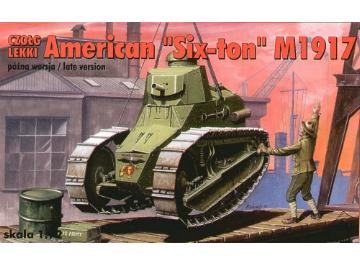
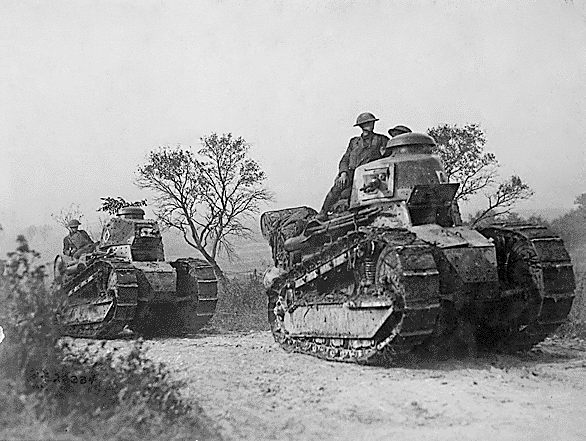
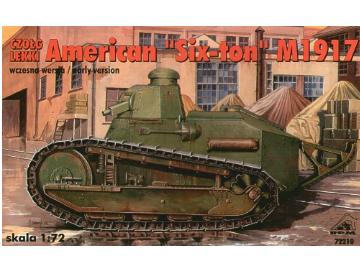
Ensimmäinen sarjavalmisteinen tankki yhdysvalloissa oli M1917 jonka valmistus ehdittiin aloittaa hieman ennen kuin WW-Iehti loppua. Vaunu oli kopio Renault Ft tankista, ja tarkoitus oli valmistaa näitä vaunuja ranskassa oleville joukoille, jotka jo käyttivät vähäisessä määrin ranskalaisten valmistamia Renaut Ft panssarivaunuja.

Valmistus aloitettiin yhteistyössä ranskalaisten kanssa, koska ranskan oma tuotanto ei riittänyt kattamaan yhdysvaltojen haluamia Renault FT vaunuja, niiden kysyntää ja tarvetta WW-I rintamalla.
                    

Vaunuja tilattiin 4440 kpl mutta vain 950 ehdittiin valmistaa ennen kuin sota päättyi.

Yhdysvaltain armeija käytti 1920 luvun ajan näitä vaunuja, mutta taisteluihin ne eivät osallistuneet ja vaunut poistettiin vähitellen käytöstä vuoden 1930 alkuun mennessä.
--------------------------------------------------------------------------------------------------------------------
-----------------------------------------------------------------------------------------------------------------------

The M1917 was the USA's first mass-produced tank, entering production shortly before the end of World War I.[2] It was a license-built near-copy of the French Renault FT, and was intended to arm the American Expeditionary Forces in France, but US manufacturers failed to produce any in time to take part in the War. Of the 4,440 ordered, about 950 were eventually completed. They remained in service throughout the 1920s but did not take part in any combat, and were phased out during the 1930s


A joint Anglo-American programme was set up to develop a new type of heavy tank similar to those then in use by the British. It was, though, expected that sizeable quantities would not be available until April of the following year. Because of the wartime demands on French industry, the Inter-Allied Tank Commission decided that the quickest way to supply the American forces with sufficient armour was to manufacture the Renault FT light tank in the USA.


A requirement of 1,200 was decided, later increased to 4,400, and some sample Renault tanks, plans, and various parts were sent to the US for study. The design was to be carried out by the Ordnance Department, under the job title "Six-ton Special Tractor," and orders for the vehicles placed with private manufacturers. 

However, the project was beset by problems: the French specifications were metric and incompatible with American (imperial) machinery; coordination between military departments, suppliers, and manufacturers was poor; bureaucratic inertia, lack of cooperation from military departments, and possible vested interests delayed progress.
                     File:M1917 Tank.jpg
                                                                   Light tank M1917
Place of origin: United States
Specifications
Weight: 7.25 tons
Length: 16'5"
Width: 5'10 1/2 "
Height: 7'7"
Crew: 2
Armor: 0.25" to 0.6"
Armament: 37mm M1916 gun or Marlin M1917, later M1919 Browning machine gun

Engine: Buda HU modified 4-cylinder, 42 hp, with forced water cooling
Transmission: sliding gear, 4 speed forward, 1 reverse
Suspension: Coil and leaf springs, with bogies and rollers.
Fuel capacity :30 gallons (30 miles on the road)
Operational range: 48 km (30 miles) on road.
Speed: 8 km/h (5.5 mph)

The Army in France was expecting the first 300 M1917s by April, 1918. In the event, production did not begin until the autumn, and the first completed vehicles emerged only in October. Two tanks arrived in France on November 20, nine days after the end of hostilities, and a further eight in December. In the summer of 1918, with no sign of the M1917s and US troops desperately needed at the Front, France supplied 144 Renault FTs, which were used to equip the US Light Tank Brigade.
                   

After the war, the Van Dorn Iron Works, the Maxwell Motor Co., and the C.L. Best Co. built 950 M1917s. 374 had cannons, 526 had machine guns, and 50 were signal (wireless) tanks. These were delivered to the Tank Corps, to complement about 200 Renault FTs brought back from France.

Ford Tank M1918

Jenő Farkas, englannin kielisissä yhteyksissä usein Eugene Farkas; 26. lokakuuta 1881 Káld, Itävalta-Unkari - 24. helmikuuta 1963, Laguna Beach, Kalifornia, Yhdysvallat, oli unkarilainen autonsuunnittelija, joka teki merkittävimmän osan työurastaan Fordilla. Farkas suunnitteli myös kahdella traktorin moottorilla varustetun panssarivaunun, jossa oli tilaa kolmen hengen miehistölle, Ford M 1918.

1917 Ford Motor Company tekee sopimuksen kevyen, Renault FT tyyppisen panssarivaunun rakentamisesta yhdysvaltojen armeijalle. 
Vaunussa oli kuljettaja ja konekivääri ampuja, joka aseena on 0.30 cal konekivääri.
Nopeus on n. 8 km/h.  Moottorina 2 x Ford T-mallin 4 sylinteristä bensiini moottoria.
                                 
Tämä kolmas yhdysvalloissa valmistettu tankki, kaksi aikaisemmin valmistettua mallia Tank Mark VIII* Ricardo joita valmistettiin useita, sekä M1917  6 tn Renault FT kopio 

M1918 oli enimmäisiä keveitä yhdysvalloissa suunniteltuja ja valmistettuja tankkeja. Keveys oli seikka jota suosittiin kuljetusten johdosta koska pieniä kevyita tankkeja oli hyvin helppo siirtää kuorma-autoilla junalla tai laivalla aina tilanteen mukaan.

Panssarivaunuja tilattiin 15000 kpl, mutta vain 15 kpl ehdittiin rakentaa ennen kuin sota loppui. Armeija tilasi 1000 kpl näitä vaunuja mutta perui myöhemmin tilauksen.
Lisäksi vaunu oli liian pieni ja ahdas, eikä täyttänyt kaikkia asetettuja vaatimuksia U.S. Tank Corps mielestä, joten Ford panssarien tuotantoa ei jatkettu tämän pidemmälle.

Sen sijaan yhdysvallat jatkoi Renault FT-17 vaunujen valmistusta.

Kaksi valmistunutta Ford tankkia on säilynyt. 
Yksi on Patton museossa,  Fort Knox Kentuky.
Toinen US Army Ordnance museossa, Aberdeen Maryland.
-------------------------------------------------------------------------------------------------------------------------------
-------------------------------------------------------------------------------------------------------------------------------
The M1917 was the USA's first mass-produced tank, entering production shortly before the end of World War I. It was a license-built near-copy of the French Renault FT, and was intended to arm the American Expeditionary Forces in France, but US manufacturers failed to produce any in time to take part in the War. Of the 4,440 ordered, about 950 were eventually completed. They remained in service throughout the 1920s but did not take part in any combat, and were phased out during the 1930s
-------------------------------------------------------------------------------------------------------------------------
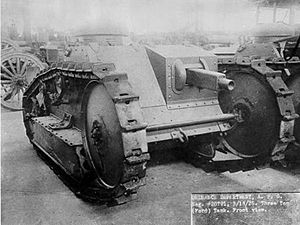
The Ford 3-Ton M1918 was one of the first light tank designs by the U.S. It was a small two-man, one-gun tank. It was armed with a M1919 Browning machine gun and could reach a maximum speed of 8mph.
                                M1918-ford-3-ton-tank.jpg
M1918-ford-3-ton-tank.
Type: Light tank
Place of origin: United States
Specifications
Weight: 3 tonnes
Length: 14 ft
Width: 6 ft
Height: 6 ft
Crew: 2 (Driver and gunner)
Main armament: 0.30 caliber Browning machine-gun
Secondary armament: none
Engine:Two Ford Model T engines 45 hp
Power/weight 10.4 hp/t
Operational range: 55 km

Speed:12.8km/h (8 mph)

Design on the 3-ton tank started in mid-1918, before which American tank forces had been largely equipped with British or French examples. The 3-Ton was a two man tank designed so that American forces could use another tank besides the Renault FT in battle, and was in fact designed around the FT but as a cheaper alternative. 

Its two Model T ford engines were controlled from the driver- seated at the front- with a gunner beside him who had control of a .30/06 machine gun (either a M-1917 Marlin or M-1919) on a limited-traverse mount. The initial production run of the 3-ton was of fifteen vehicles, one of these was sent to France for testing.

A contract for 15,000 of these vehicles was awarded; however, the U.S tank corps felt it did not meet the requirements they wanted. The contract for the 15,000 tanks was ended by the Armistice, leaving only the fifteen original vehicles produced

There are two known survivors with the National Armor & Cavalry Museum at Fort Benning, Georgia, second is with the Ordnance Collection at Fort Lee, VA.

30.3.2014

Us Mark VIII* Liberty.

Tämä tankki tunnettiin yhdysvalloissa Anglo-American ja Mark VIII star tai Mark Liberty (myös International) nimillä joita rakennettiin yhdysvalloissa maailman-sodan jälkeen vuosien 1918 - 1920 aikana n. 100 kpl. Tankit rakensi Rock Island Arsenal tehdas.
Tankki on sama kuin britannian Mark VIII malli, pienin muutoksin.


The Tank Mark VIII also known as the Liberty or the The International was an Anglo-American tank design of the First World War intended to overcome the limitations of the earlier British designs and be a collaborative effort to equip France, the UK and the US with a single heavy tank design.
Production at a site in France was expected to take advantage of US industrial capacity to produce the automotive elements with the UK producing the armoured hulls and armament. The planned production levels would have equipped the Allied armies with a very large tank force that would have broken through the German defensive positions in the planned offensive for 1919. In practice manufacture was slow and only a few vehicles were produced before the end of the war in November 1918.
After the war, 100 vehicles assembled in the US were used by the US Army until more advanced designs replaced them in 1932. A few tanks that had not been scrapped by the start of World War II were provided to Canada for training purposes.

Designed:1917
Manufacturer: UK: North British Locomotive Company
US: Rock Island Arsenal
Produced :1918–1920
Number built: 125
Specifications
Weight:37 Long tons (dry)
Length: 34 ft 2 in (10.42 m)
Width: 11 f t 8 in (3.56 m)
9 ft (2.7 m) sponsons in
Height 10 ft 3 in (3.13 m)
Crew :12 British tanks, 10 US tanks
Armor: 16 mm maximum
Main armament:  two QF 6 pdr 6 cwt Hotchkiss (57 mm) guns
Secondary armament: seven 7.92 mm Hotchkiss machine guns or five M1917 Browning machine guns
Engine: V-12 Liberty or V-12 Ricardo 300 hp (323 kW)
Power/weight: 8.66 hp/tonne
Suspension unsprung
Operationalrange:50 mi (80 km)
Speed: 5.25 mph (8.45 km/h)
governed to 6.25 maximum

The Mark VIII kept many of the general features of the Mark I-V series: it had their typical high track run and no revolving turret but two sponsons, one on each side of the tank, armed with a 6-pounder (57 mm) gun. But it also resembled the Mark VI-project in that it had more rounded and wider tracks and a large superstructure on top directly beneath the front of which the driver was seated. An innovative feature was the departure from the concept of the box tank with its single space into which all accessories were crammed. 

The Mark VIII was compartimentalised with a separate engine room at the back. This vastly improved fighting conditions as a bulkhead protected the crew against the deafening engine noise, noxious fumes and heat.
There were no machine guns in the sponsons, only the 6-pounders each manned by a gunner and loader. 

The side machine guns were to the rear of the sponsons mounted in the hull doors. Major Alden had designed the sponsons to be retractable (they could be swung in at the rear by the crew, being pivoted at the front), to reduce the width of the vehicle if enemy obstacles were encountered. 

Five more machine guns were in the superstructure: two at the front—left and right next to the driver—and one on each of the other sides. As there was no machine gun position covering the back of the tank there was a dead angle vulnerable to infantry attack. To solve this problem a triangular steel deflector plate was attached. The rear superstructure machine gunner could use it to deflect his fire down into that area behind the tank. 

The tank carried 208 shells and 13,848 machine gun rounds, mostly in a large ammunition locker in the centre which formed a platform on which the commander stood behind the driver observing the battlefield through a cupola with four vision slits. Later the side superstructure guns were removed on US tanks.

The twelfth crew member was the mechanic, seated next to the 300 hp Liberty V-12 (or in British tanks Ricardo V-12) petrol engine) cooled by a large horizontal radiator Three armoured fuel tanks at the rear held 200 Imperial gallons (240 US gallons, or 909 litres) of fuel giving a range of 89 km. The transmission used a planetary gearbox giving two speeds in either forward or reverse. Top speed was 5.25 mph (8 km/h).

To improve its trench crossing ability to 4.88 m the vehicle had a very elongated shape. The track length was 34 ft 2 in (10.42 m) but even though the hull width was an impressive nominal 3.76 m, the actual length-width ratio of the tracks was very poor as that width included the sponsons. Combined with wide tracks it proved difficult to turn the tank. During testing many tracks twisted and broke in a turn and it was decided to use longer, stronger 13.25 inch (337 mm) links made of hardened cast armour plate, stiffened by webs formed by recesses in the track plate. 

Another effect of the narrow hull was that the fighting compartment was also very narrow . This was made worse by the fact that now the gap between the double track frames at each side was very wide; earlier types had only the tracks themselves widened. Nevertheless the tank was supposed to accommodate another twenty infantry men in full gear if necessary. In absolute terms the vehicle was very large: at 10 ft 3 in (3.13 m) tall the Mark VIII was the second largest operational tank in history, after the Char 2C. 

However its weight was only 38.3 long tons (38.9 t)  fitted for battle as the armour plate was thin with a thickness of 16 mm on the front and sides—a slight improvement over the Mark V but very thin by later standards. The roof and bottom of the hull were protected by only 6 mm thick armour plate, leaving the tank very vulnerable to mortar shells and landmines.

The American Liberty tanks equipped a single unit: the 67th Infantry (Tank) Regiment, based in Aberdeen, Maryland. The curious designation of the unit had its origin in the fact that since 1922 by law all tanks had to be part of the Infantry. The two machine gun positions at the sides of the superstructure were eliminated, so the crew could be reduced to ten. Water-cooled M1917 Browning machine guns were used. Despite many modifications the vehicles suffered from overheating and poor reliability, causing a prejudice in the Army against the use of heavy tanks. From 1932 onward they were phased out; all were in storage in 1934. In 1940 Canada had a lack of training tanks and bought most vehicles at scrap value.

28.3.2014

Cunningham T1

Yhdysvaltain ratsuväen taholta ennakoitiin (1920) että seuraavassa sodassa tankit
näyttelisivät ratkaisevaa osaa ja olivat ratsuväen kaluston mekanisoinnin kannalla.

Muutama näistä kannattajista pystyi vaikuttamaan niin paljon että Cunningham sai pienen määrärahan panssarivaunujen ja muiden panssaroitujen ajoneuvojen koe tuotantoa varten. 

Nämä henkilöt halusivat uuden panssarivaunun olevan kevyen ja nopean, toisin kuin sodan aikana kehitetyt kömpelöt ja hyvin hitaat panssarivaunut, joiden tarkoitus oli vain murskata vihollisen etulinjan puolustus, suoralla hyökkäyksella linjaa kohti.

Tämän johdosta suosittelijat, jotka rahoituksen saivat järjestymään halusivat kevyen, nopean panssarivaunun, nähden niiden nopean liikkuvuuden antamat edut, verrattuna moniin käytössä oleviin suuriin, kömpelöihin, hitaisiin panssarivaunuihin yhdysvalloissa ja euroopassa, joita muutamassa maassa yhä haluttiin kehittää lisää.

Suuret panssarivaunut olivat kyllä soveliaita asemasodan taisteluissa, mutta linjojen
yli edettyään ne olivat liian hitaita, kyetäkseen etenemään nopeasti vihollisen takana
kuten aikaisemmin käytetty liikkuva ratsuväki pystyi nopeasti iskuillaan tekemään.

Kevyet panssarivaunut pystyisivät kiertämään liian voimakkaat esteet, ne pystyivät
myös saartamaan vihollisen nopeasti, ja kulkemaan pitkälle tiedustelu matkoillaan.
Tässä yhteydessä tulivat tunnetuksi sellaiset nimet kuten; Campell, Chaffee, Patton.

Cunninghamin valmistama panssarivaunu oli nopein. Sen nopeus oli 20 km/h, kun  
muilla vaunuilla oli nopeus oli vain 5-7 km/h.


T1 Cunningham.
Amerikkalainen kevyt tankki joka ei koskaa edennyt prototyyppien vaihetta pidemmälle.
Nämä versiot nimettiin koekappaleiden valmistumisen mukaan T1E2 - T1E4 tankeiksi joita kehitettiin lisää vuosien 1922  ja 1928 vuosien välisenä aikana.
Näitä muutamia protyyppejä lukuun ottamatta panssarivaunuja ei valmistettu lisää.

Valmistettujen panssarivaunujen määrä ei ole tiedossa, mutta yksi tankki on säilynyt.
Vaunun sijaintipaikka on Fort Lee sotilas museo, virginiassa, yhdysvalloissa.

T1 Rungon yläpuolella oleva pyöreä torni oli panssarivaunun takaosassa, torni oli rungon levyinen, johon pääsy taka-ovien kautta, torni kääntö oli käsivoimin.
Paino: 8.8 tn
Moottori: 132 hp, V-8, bensiini, neste jäähdytys
Vaihteisto: 3 eteen ja 1 taakse.
Aseistus: Lyhyt piippu 37 mm tykki tornissa, 0.30 cal konekivääri tykin vieressä.

T1E2  / T1E3 välimallit, pitkäputkinen suurirekyylinen tykki suurin ero.

T1E4
Torni joka tässä mallissa oli jo vaunun keskellä, kääntyi täydet 360 astetta
Paino: 8.6 tn.
Moottori: 140 hp V-8 bensiini, nestejäähdytys.
Vaihteisto: Cotta (Ford) ns. liukuvat vaihteet, 3 eteen ja 1 taakse.
Aseistus: 37 mm tykki tornissa ja 1x 0.30 cal konekivääri tykin vieressä.


                                                           T1 E2:/ 
                                            T1 E3: Torniin asennettu tykki malli pitkäpiippuinen, siis suurempi rekyylinen.

                                                                    T1E4   
The T1 Cunningham was a US light tank design that never left the prototype stages. Officially carrying the designations of T1E2 and T1E4, it continued through the development stages from 1922 through 1928. This tank was never mass produced, nor was it ever fielded.

The T1E2 had a turret at the top rear of the tank that required the traverse by hand. It had an overall weight of 8.8 tons and was powered with a gasoline V-type 8 cylinder water cooled engine producing 132 horsepower. The transmission was a Cotta brand with 3 forward and 1 reverse gears. Armament included the 37 mm M5, L/50 main gun with a secondary machine gun as a .30 cal M1919A4, coaxial. 

The T1E4 had a centrally mounted turret with a full 360º manual traverse. It had an overall weight of 8.6 tons and was powered with a gasoline V-8 water cooled engine producing 140 horsepower. The transmission was a modified Cotta sliding gear with 3 forward and 1 reverse gears. Armament included the 37 mm semi-automatic M1924 and the secondary machine gun was a .30 cal M1919A2 MG, coaxial. 
It is unknown how many were actually produced in the prototype stages, but there is at least one known to have been created, currently at the Fort Lee in VA, USA.

T1 Cunningham
Type: Light Tank
Place of origin: United States
Service history: In service prototype only
Used by: United States of America
Production history: DesignerJames Cunningham
Designed: 1922
Manufacturer: James Cunningham, Son & Company (Rochester, NY)
Unit cost: Unknown
Produced: Prototypes only 1922-1934
Variants: T1E2 and T1E4
Specifications
Weight:
8.8 tons (7.98 metric tons) (T1E2)
8.6 tons (7.8 metric tons) (T1E4)
Length:
12 ft 9.6 in (T1E2)
15 ft 5 in (T1E4)
Width:
6 ft 2.4 in (T1E2)
7 ft 2.75 in (T1E4)
Height:
7 ft 7.2 in (T1E2)
6 ft 6.75 in (T1E4)
Crew:
2 (T1E2) 1.Commander, Driver 2.Gunner, Radio Operator, Loader
Armor:
(T1E2) Hull Armour (inches) front 0.6 (15.24 mm), sides 0.4 (10.16 mm)
Turret Armour (inches) front 0.6 (15.24 mm), sides 0.25 (6.35 mm)

(T1E4) 
Hull Armour (inches) front 0.625 (15.875 mm), sides 0.25 (6.35 mm)
Turret Armour (inches) front 0.5 (12.7 mm), sides 0.25 (6.35 mm)
Main armament (T1E2):
Main: 37 mm M5, L/50 smoothboregun, (104 rounds)
Secondary: .30 cal M1919A4, coaxial, (3000 rounds)

(T1E4)
Main: 37 mm semi-automatic M1924smoothbore, (80 rounds)
Secondary: .30 cal M1919A2 MG,coaxial, (3000 rounds)
Engine: Cunningham V8 gasoline, water cooled
132 hp (98 kW) (net) (T1E2)
140 hp (100 kW) (T1E4)
Suspension:
(T1E2) Leaf springs with 4 two wheeled bogies
(T1E4) Vickers-Armstrong type Semi-elliptic springing
Operational range:
T1E2 - Unknown
T1E4 - 85 miles
Speed:
(T1E2) 18.2 mph (29.29 kph)
(T1E4) 20 mph (32.2 kph)

27.3.2014

TG-5 (T-42)

Neuvostoliitossa valmistui TG-5 / Tank Grotte = suuri panssarivaunu, vuosi 1925.
                          
Paino: 100 tn
Panssarointi: 75 mm
Pää ase: Yksi 105 mm tykki tai 150 mm haupitsi.
Lisä aseet: 2 x 37 mm tykkiä.
Konekivärit: Useita 7,62 mm joista kaksi ilmatorjuntaa varten.
Miehistö: 8-10
Yksi  (1) testi - malli  panssarivaunu valmistettiin, se jäi ainoaksi joka valmistettiin.
--------------------------------------------------------------------------------------------------------------------
The Soviet Union manufacture  TG-5 / Tank Grotte = a large tank, the year 1925. 
                         
Weight: 100 tonnes 
The armor: 75 mm 
The main weapon: One of the 105 mm gun or a 150 mm howitzer. 
Additional weapons: 2 x 37 mm cannons, both own turret 
Konekivärit: Several 7.62 mm of which two antiaircraft. 
Crew: 8-10 

One (1) test - a model tank was manufactured, it was left as the sole only made prepared.


FCM 1A model 1916.

Neuvoa-antava tykistön komitea (Comité Consultatif de l'Artillerie d'Assaut / CCAS) joka oli luotu 13. 12. 1916, kokoontui ensimmäistä kertaa 17. joulukuuta 1916.

Tässä ensimmäisessä istunnossaan kerrottiin, että Renault ja FCM olivat yhteistyössä raskaan säiliön hankeessa joka painoi kolmekymmentä tonnia. Kenraali Estienne korosti tässä yhteydessä, että tankkien tuotanto pitää suunnata pienten ja erittäin suurien panssarivaunujen valmistamiseen.

Seuraavassa kokouksessa 30. joulukuuta Estienne yllättyi huomatessa että ilman selvää syytä 105 mm tykki oli suunniteltu tähän panssarivaunuun Hän kannatti mieluummin 75 mm tykin asentamista. Ratkaisevan kokouksen aikana 17. 12.1917. kenraali Estienne oli poissa, ilmoittaen kirjeellä hyväksyvänsä tämän hyvin esitellyn hankkeen, mutta kannattavansa 75mm tykin asentamista 105 mm tykin sijaan, sekä hyväksyvänsä sopimuksen kahden prototyypin rakentamisesta, samalla kirjeellä.


17. marraskuuta 1916, johtaja Moritz, perehdyttää ja esittelee CCAS tulevan FCM 1A prototyypin suunnitelmat. Moriz selittää vaunun olevan testipohja joka ei täysin vastaa alkuperäisen suunnitelman "versiota" kaikkien teknisten tietojen osalta. 

Itse asiassa yhtiön pyrkimys oli rakentaa toimiva panssarivaunu valmiiksi mahdollisimman pian. Yhtiö oli jo rakentanut prototyypin joka perustui suurelta osin alkuperäiseen suunitelman malliin ja oli siis paljon lähempänä "B"-konseptia, vaikka oli varustettu 105 mm tykkillä, bensiini moottorilla ja mekaanisella voimansiirrolla.

Hydraulisen voimansiirron oli hylännyt CCAS 10. toukokuuta. Armeijalle kerrotaan tammikuussa 1917 suunnitelman FCM 1A hyväksymisestä ja annetaan hyvä kuva niistä ominaisuuksista joilla toimiva protyyppi pystytään rakentamaan.

Tankki painoi 42 tn ja oli suurin tuohon päivään rakennettu panssarivaunu. Pituus oli 8,35 m Leveys 2,842 m, rungon korkeus 1,98 m, tornin katon korkeus 2,785 m, ja kokonaiskorkeus tornin huipulla olevan kupolin katolle 3 m.

                   
                                           FCM 1A
Panssarivaunun tärkein aseistus oli 105 mm tykki, Canon de 105 Court Schneiderin, jota lyhennettiin (rekyylin alentamiseksi) niin että se pystyi toimimaan tornissa.
Ammuksen kuori sisälsi neljä kiloa räjähteitä ja ammuksen lähtönopeus 240 m/s.
Suurin sallittu määrä ammuksia oli 122 kpl.  Kahdeksantoista näistä oli pinottu pinottu lataajan ja ampujan lähelle helposti saataville, kolmeen pystysuoraan kuuden riviin. Kahdeksan kahdessa erässä taistelutilan lattian alla, sekä neljään yhdentoista riviin joita yksi rivi ammus huoneen jokaisella seinänällä.
Komentajan tarkkailupaikka tornin katolla oleva suorakulmainen tulenjohto kupoli, jossa myös kaksi 8 mm Hotchkiss konekivääriä kiinteästi palloniveleen asennettuna.
Tornissa oli myös viisi suljettavaa luukkua joiden kautta voitiin tulittaa kiväreillä tai pistolleilla lähestyvää viholllista, yksi tornin takana, yksi tornin molemmilla sivulla kaksi rungon laitojen alla yksi kummallakin puolella tornin takana.

Toiseen prototyyppi asennettiin yksi Renault 220 hp kaksitoista sylinterinen moottori (bensiini) jolloin suurin nopeus on 10 km/h, max 1200 rpm,  pienin nopeus oli 2 km/h, vaihteisto oli mekaaninen kytkin lamellikytkin, vetoratas takana, johtopyörä edessä. 
Jousitus koostui lehti jousitetusta neljän pyörän teli rakenteesta joiden jokainen laippa on vuorotellen sisä- tai ulkopuolella. 

Telakengän leveys 600 mm, pintapaine 0,6 kg/m2, maavara 400 mm, painopiste sijoittui panssarivaunun keskikohdalle, yhden metrin korkeudelle maan pinnasta.  Suunnittelusta oltiin ylpeitä, koska panssarivaunussa ei ollut lainkaan ulkopuolella olevia osia tai ulokkeita, jotka haittaisivat sen liikkuvuutta, kuten Schneider CA1 ja Saint Chamond panssarivaunuissa. 
Tankki ylitti metrin metrin korkeat esteet ja pystyi ylittämään 3,5 m leveät kaivannot.

Suunnittelussa oltiin ylpeitä siitä ettei tankissa ole ulkonevia osia edessä tai takana, kuten oli ranskalaisten Schneider CA1 ja Saint Chamond tankeissa joka merkittävästi oli aikaisemmin haitannut näiden panssarivaunujen liikkuvuutta taistelu maastossa.

Alkuperäinen vaunu oli suunniteltu seitsemälle miehelle, mutta joulukuussa 1916 miehistön määrä supistettiin kuuteen mieheen.
Komentaja oli tornissa vasemmalla toimien samalla tykin päällikkönä, oikella puolella tornissa tykin ampuja, kolmas konekivääri-ampuja, tykin lataaja,  lataajan avustaja joka antaa uusia ammuksia tykin lataajalle. Ohjaamossa ajaja sekä mekaanikko joka toimi toisena taakse suunnatun konekiväärin ampujana.

FCM 1A oli ensimmäinen panssaroitu ajoneuvo, joka pystyi tarjoamaan todellisen suojan raskaan tykistön tulitukselle ensimmäisen maailman sodan aikana.

Panssarointi rungon etupuolella 35mm, myös tornissa 35mm.  Vaunun sivuilla ja takaa panssarin vahvuus oli 21 mm, yläpuolet ja katto 15 mm. Kokonaispainosta säiliön osuus oli 41,4 tonnia. Korin paino oli 22,1 tonnia, 17,5 tonnia selittyy rungolla, joista 5,5 tonnia oli panssaroinnin osuus  ja 4,6 tonnia tornista jonka panssarointi painoi 1,3 tonnia.

FCM 1A telaston rakenne oli hyvin pitkä, tarkoituksella että tankki voisi ylittää yli 3 m leveät juoksuhaudat suoraan niiden yli ajamalla. Panssarivaunun runko oli jaettu neljään erikokoiseen osaan, joita ei erotettu toisistaan väliseinillä. Suhteellisen lyhyt taistelutila oli edessä heti edessä olevan ohjaamon takana, oli suhteellisen lyhyt taistelutila jonka päälle tornit oli asennettu, tähystystorni sen huipulla, ammusten säilytys tila, ja suuri moottoritila takana.

Etu levyn profiili seurasi rungon pohjamuotoilua ja nousi kaareutuen eteenpäin, päätyen suoraan otsalevyyn jonka lasitetun ikkunan takana ohjaamo sijaitsi.
Tornin halkaisija oli runkoa leveämpi joka antoi vaikutelman että torni lepäsi sivulta suoraan sivulta näkyvien kavennettujen pyöristysten varassa. 
Tornin katto oli kartiomainen sivujen viettäessä alapäästään eteenpäin, niin että myös tornin profiili oli kiilamainen.

Paljon huomiota oli annettu ergonomialle, Mourret on ilmoittanut motiivit joilla tankki oli suunniteltu telakalla. Ajoneuvo oli vähemmän ahdas kuin aikaisemmat mallit, miehistö pystyi kävelemään rungon sisällä vain hieman välillä kyyristyen. 
Mekaanikko pystyi liikkumaan koneen molemmilla puolilla, komentaja pystyi puhumaan kuljettajan ja myös etuampujan ja mekaanikon kanssa puheputken avulla.

Ulkoinen viestitys oli mekaanikon vastuulla, joko pienellä lipulla tykkitornin katolla tai erilaisin palomerkein tai sähkövalon avulla antoi erilaisia singnaaleja tai merkkejä.
Tankin miehistö kulki yleensä kupolin läpi, mutta jokaiselle miehistön jäsenelle oli myös oma pyöreä tai soikea luukku joka oli hänen ylä tai alapuolellaan.

Char FCM 1 ei koskaan valmistunut prototyyppiasteelle saakka johtuen Suuren sodan päättymisestä. Se on tallennettu 105mm haupitsilla joka tankin pääasiallinen aseistus oli sen alkuperäisessä muodossa. 
--------------------------------------------------------------------------------------------------------------
--------------------------------------------------------------------------------------------------------------
The Consultative Committee of the Assault Artillery (Comité Consultatif de l'Artillerie d'Assaut or CCAS) had been created on 13 December 1916 and for the first time met on 17 December. During this first session it was reported that Renault and FCM were cooperating in a heavy tank project of thirty tonnes. Estienne on this occasion stressed that production should be "orientated towards small types and very large types". During the next meeting on 30 December, Estienne was surprised to discover that for no clear reasons a 105 mm gun was planned. He himself preferred a 75 mm gun. Estienne was absent on the crucial meeting of 17 January, but by letter informed the committee that he found the project well-presented and satisfactory and agreed with the quick construction of two prototypes; he stated his preference for a 75 mm over a 105 mm gun.
                     
In December Joffre was replaced as supreme commander by Robert Nivelle. In late January Nivelle learned of the heavy tank project from Estienne. He was much more alarmed than Joffre had been. On 29 January he wrote a letter to Minister Thomas, making clear that under no circumstances could the project be allowed to impede production of the Schneider CA. 

Originally a crew of seven had been planned, but in December 1917 this had been reduced to six: a commander in the left of the turret who also had the responsibility of aiming the gun; a second man in the right of the turret who combined the functions of gunner, machine-gunner and loader; a standing assistant-loader handing new rounds to the loader — at first two of these had been seen as necessary; a driver; a front machine-gunner; and a mechanic who doubled as a rear machine-gunner.
           
The main armament was a 105 mm gun, a Canon de 105 Court Schneider, shortened to reduce its recoil so that it could fit into a turret. If fired a HE shell with four kilogrammes of explosives and a muzzle velocity of 240 m/s. The large hull allowed for a large ammunition stock of 122 rounds: eighteen, stacked in three vertical rows of six in front of him, were directly accessible to the gunner/loader; two batches of eight were stowed below the fighting compartment floor and forty-four, stacked in four vertical rows of eleven, lined each wall of the ammunition room. The commander pointed the gun by observing the target through a vane sight, fitted on the turret roof, from his rectangular "cupola". There were two Hotchkiss 8 mm machine-guns in fixed ball-mount positions; reserve machine-guns or pistols could be fired through five vertical slits that could be plugged: one at the rear of the turret, two at the turret sides and two at the hull sides below the turret rear.

In the prototype a single Renault 220 HP twelve cylinder engine was installed, allowing a maximum speed of 10 km/h (6.2 mph) at 1200 rpm. The minimum speed was 2 km/h (1.24 mph). The transmission was mechanical, using a disc clutch. The sprocket was at the rear, the idler at the front. The suspension consisted of bogies, sprung by leaf springs, of four wheels each with alternating external and internal flanges. The tracks were 600 mm (23.6) wide, resulting in a ground pressure of 0.6 kg/cm². Ground clearance was 400 mm (15.7 in) . The centre of gravity was in the middle of the vehicle, at a level of one metre above the ground. The design prided itself on not having any overhanging sections at the front or the rear, as had greatly hampered the mobility of the earlier French Schneider CA1 and Saint Chamond tanks. The tank could overcome a 1m (3.3 ft) high vertical obstacle and cross a trench 3.5 m (11.5 ft) wide.


Much attention had been given to ergonomics, Mourret's stated motive in having the tank designed by a shipyard. The vehicle was less cramped than earlier designs, the crew being able to more or less walk through the hull, with only a slight crouch. 
The mechanic could access the engine at both sides. The commander could communicate with the driver, the front machine-gunner and the mechanic via speaking tubes. 
External communications were the responsibility of the mechanic who could lift a little hatchet just behind the turret to give signals by fanions, pyrotechnic devices or electrical lights. 
The tank could be entered through the cupola, but each member had oval or round escape hatches above and below him.

The hull of the FCM 1A was very elongated, in order to cross wide trenches. It was more or less compartmentalised into four sections, that however were not separated by bulkheads: a relatively short driver compartment at the front, a fighting compartment with a turret at its top, a larger munitions room and finally a large engine compartment at the rear. The last was enlarged at both sides over the tracks, to create room for long rectangular fuel tanks. The front of the hull followed the profile of the tall climbing faces of the tracks and therefore gradually curved upwards, ending in a high, vertical, nose plate. 

The glacis plate behind it was oriented almost horizontally and connected at its rear to the vertical top front plate of the driver compartment. As the turret ring was larger than the width of the hull, it partly rested on rounded lateral extensions. The turret was a truncated cone with a roof sloping down to the front, so that in side view its profile was wedge-shaped.
                    
Thomas answered on 5 February that there was no danger of this; anyway he had just happened to affirm on 1 February the policy of General Mourret, who had already ordered the simultaneous development of three prototypes: the lightened "A" version, weighing thirty tons, having a length of 6.92 metres, with a suspension featuring twenty-nine double road wheels, four main bogies and five top rollers, powered by two Renault 200 hp engines and to be equipped with a 75 mm gun, to fulfil the original order of 20 October; the "B" version of forty-five tons with a hull lengthened to 7.39 metres, armed with a 75 mm gun and two machine guns, with a suspension featuring thirty road wheels, five main bogies and six top rollers, using a new 380 hp engine and a petro-hydraulic transmission and the "C" version of 62 tons with a 75 mm gun, a length of 9.31 meters, a suspension featuring forty-five road wheels, six main bogies and nine top rollers, and four engines of 110 hp combined with a petro-electrical transmission.

Nivelle's misgivings were reinforced by inquiries from a parliamentary financial commission led by Pierre Renaudel. A plan by Breton to immediately order fifty vehicles more or less identical to the mock-up was therefore rejected. The 1 February order of two additional prototypes was confirmed by the CCAS on 7 February.

Eventually the "FCM 1A" would be developed with a 105 mm gun and the "FCM 1B" would use a petrol-mechanical transmission.

The Char FCM 1 never got past the prototype stage due to the Great War ending. It packed a 105mm howitzer as its main armament in its original form. 

I say it screams "QUAR!!!