Näytetään tekstit, joissa on tunniste Finnish Saga. Näytä kaikki tekstit

6.9.2017

Early Finnish saga 10. - first eastern border 1323

Throughout the Middle Ages, the city thrived culturally. A large number of birch bark letters have been unearthed in excavations, perhaps suggesting widespread literacy, although this is uncertain (some scholars suggest that a clerical or scribal elite wrote them on behalf of a largely illiterate populace). It was in Novgorod that the Novgorod Codex, the oldest Slavic book written north of Bulgaria, and the oldest inscription in a Finnic language (Birch bark letter no. 292) were unearthed. 

Some of the most ancient Russian chronicles (Novgorod First Chronicle) were written in the scriptorium of the archbishops who also promoted iconography and patronized church construction. The Novgorod merchant Sadko became a popular hero of Russian folklore.

Novgorod was never conquered by the Mongols during the Mongol invasion of Rus. The Mongol army turned back about 200 kilometers from the city, not because of the city's strength, but probably because the Mongol commanders did not want to get bogged down in the marshlands surrounding the city. 

Kuvahaun tulos haulle golden horde
                                                              Moscow area.                                     

        Kuvahaun tulos haulle golden horde

However, the grand princes of Moscow, who acted as tax collectors for the khans of the Golden Horde, did collect tribute in Novgorod, most notably Yury Danilovich and his brother, Ivan Kalita.

In 1259, Hordes tax-collectors and census-takers arrived in the city, leading to political disturbances and forcing Alexander Nevsky to punish a number of town officials (he cut off their noses) for defying him as Grand Prince of Vladimir (soon to be the khan's tax-collector in Russia) and his Mongol overlords. In the 14th century, raids by Novgorod pirates, or ushkuiniki, sowed fear as far as Kazan and Astrakhan, assisting Novgorod in wars with the Grand Duchy of Moscow.

During the era of Old Rus' State, Novgorod was a trade hub at the northern end of both the Volga trade route and the "route from the Varangians to the Greeks" along the Dnieper river system. A vast array of goods were transported along these routes and exchanged with local Novgorod merchants and other traders. 

The farmers of Gotland retained the Saint Olof trading house well into the 12th century. Later German merchantmen also established tradinghouses in Novgorod. Scandinavian royalty would intermarry with Russian princes and princesses.


After the great schism, Novgorod struggled from the beginning of the 13th century against Swedish, Danish, and German crusaders. 


During the Swedis Novgorodian Wars, the Swedes invaded lands where some of the population had earlier paid tribute to Novgorod. 


The Germans had been trying to conquer the Baltic region since the late 12th century. Novgorod went to war 26 times with Sweden and 11 times with the Livonian Brothers of the Sword. 
The German knights, along with Danish and Swedish feudal lords, launched a series of uncoordinated attacks in 1240–1242. Novgorodian sources mention that a Swedish army was defeated in the Battle of the Neva in 1240. 


The Baltic German campaigns ended in failure after the Battle on the Ice in 1242. 
After the foundation of the castle of Viborg in 1293 the Swedes gained a foothold in Karelia.

On August 12, 1323, Sweden and Novgorod signed the Treaty of Nöteborg, regulating their border for the first time. Finnish areas first eastern border is made.

Treaty of Nöteborg   Nöteborg = Walnut-Island / castle = Pähkinä-saari / Linna

                                    Finnish areas first eastern border is made.
--------------------------------------------------------------                            Aiheeseen liittyvä kuva
                                   Hansa Kogge ship, or cog-built vessels
Hanseatic League
---------------------------------------
From 1249 onwards, sources generally regard Finland proper and Tavastia as a part of Sweden. Diocese of Finland proper is first time listed among the Swedish dioceses in 1253. In the Novgorod First Chronicle Tavastians (yem) and Finns proper (sum) are mentioned on an expedition with Swedes (svei) in 1256. However, very little is known about the situation in Finland during the following decades.

As an unexpected side effect, the expedition seems to have cost Birger the Swedish crown. As King Eric died in 1250 and Birger was still absent from Sweden, the rebellious Swedish lords selected Birger's under-aged son Valdemar as the new king instead of the powerful jarl himself.

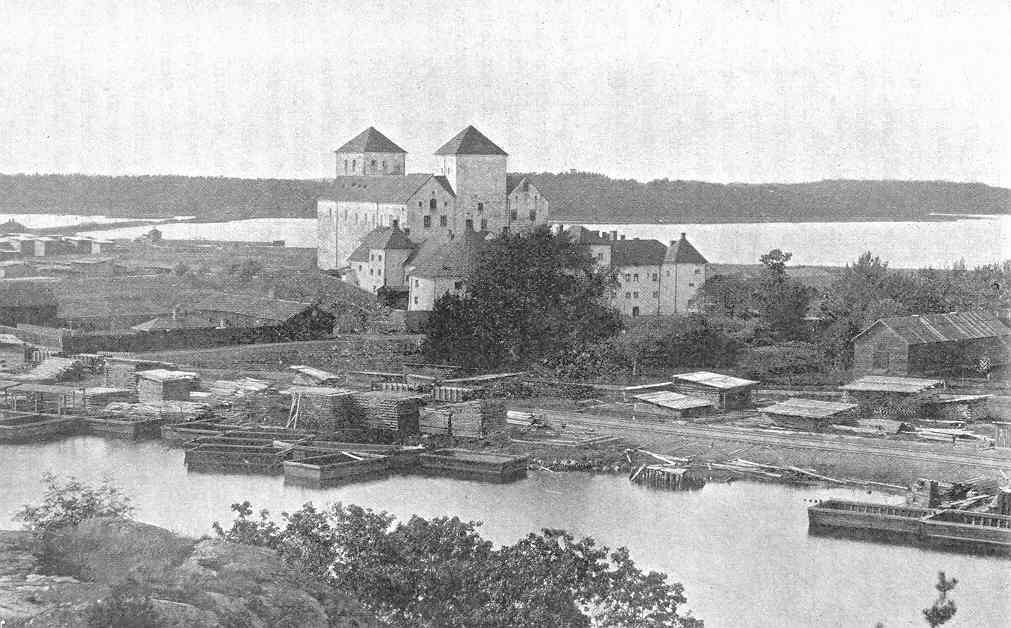
                      Åbo slott 1900..jpg
                               Turku Castle (Finnish: Turun linna, Swedish: Åbo slott)
Turku Castle

                                               Kastelholm Castle 1944
Kastelholm Castle

Reason for this is partly the fact that Western Finland was now ruled from Turku and most of the documentation remained there. As the Novgorod forces burned the city in 1318 during the Swedish-Novgorodian Wars, very little remained about what had happened in the previous century.

The last Swedish Crusade to Finland took place in 1293 against Karelians.


5.9.2017

Early Finnish saga 9. - Karelia

Finnish Karelia was historically under western dominance, religiously and politically and was separate from East Karelia, which was dominated by Novgorod and its successor states from the middle ages onwards.

During the 12th and 13th century, Karelians fought against Swedes and other Finnic tribes situated in western Finland, such as Tavastians and Finns proper. Karelians were listed as Novgorodian allies in the mid-12th century in Russian Chronicles. 

                   
Martha the Mayoress at the Destruction of the Novgorod Veche, by Klavdiy Lebedev

Kuvahaun tulos haulle valdemar king of swedenHistorical records describe Karelians pillaging Sigtuna in Sweden in 1187 and making another expedition in 1257 which lead Pope Alexander IV to call out a crusade against Karelians at the request of Valdemar, the king of Sweden. 


The Third Swedish crusade, led by the marshal Torgils Knutsson took place between 1293 and 1295. As a result of the crusade the western parts of Karelia fell under Swedish rule and the building of the Castle of Viborg on the site of destroyed Karelian fort started. According to Eric Chronicles invading Swedes conquered 14 hundreds from Karelians during the crusade.

Hostilities between Novgorod and the kingdom of Sweden continue in 1300 when a Swedish forces attacked the mouth of the River Neva and built a fort near the current location of Saint Petersburg.


The fort was destroyed the following year by the Novgorodians. Indecisive fighting in 1321 and 1322 led to negotiations and peace by the Treaty of Nöteborg which for the first time decided the border between Sweden and Novgorod. Sweden got territory around Viborg, the western Karelian Isthmus and South Karelia; and Novgorod got the eastern Karelian Isthmus, Ingria, Ladoga Karelia, North Karelia and East Karelia.
--------
At least 50 sites of iron age settlements and 40 hillforts are known from Karelia. According to archeological record and historical data most of the hillforts in Karelia were erected between 1100 and 1323.Particular Karelian culture including axes, brooches and ornamental culture flourished approximately between the years 1000-1400.
---------
First indications of human settlement in Karelia are from the Mesolithic period. The oldest find from the area is the over 9000 years old Antrea Net which is a fishing net of willow bast. The number of finds from the area is lower towards the end of the Stone Age. Archeological finds from Karelia are relatively rare between the years 400-800. From the Merovingian period onwards finds from Karelia display a distinct features of West Finnish influences which has been interpreted to result at least partly from a colonisation
----------
Karelia (Finnish: Karjala) is a historical province of Finland which Finland partly ceded to Russia after the Winter War of 1939–40. The Finnish Karelians include the present-day inhabitants of North and South Karelia and the still-surviving evacuees from the ceded territories. Present Finnish Karelia has 315,000 inhabitants. The more than 400,000 evacuees from the ceded territories were re-settled in various parts of Finland.

Finnish Karelia was historically under western dominance, religiously and politically and was separate from East Karelia, which was dominated by Novgorod and its successor states from the middle ages onwards.
-----------
In 1617 Sweden conquered Kexholm County (eastern Karelian Isthmus, Ladoga Karelia and North Karelia) from Russia. In 1634 Savonia and old Swedish Karelia were incorporated in the Viborg and Nyslott County. After the Treaty of Nystad in 1721 eastern parts of the Viborg and Nyslott County and the Kexholm County were ceded to Russia. The rest of these counties were incorporated into the Kymmenegård and Nyslott County. 

The southeastern part of this county was also ceded to Russia in the Treaty of Äbo of 1743. After the conquest in 1809 of the rest of Finland, Russia's 18th century gains, called "Old Finland", were in 1812 joined to the Grand Duchy of Finland as a gesture of good will (see Viipuri Province).

A large part of Finnish Karelia was ceded by Finland to the Soviet Union in 1940 after the Soviet aggression known as the Winter War when the new border was established close to that of 1721. During the Continuation War of 1941-44, most of the ceded area was liberated by Finnish troops, but in 1944 was occupied again by the Red Army. After the war, the remains of the Province of Viipuri were made into the Province of Kymi. In 1997 the province was incorporated within the province of Southern Finland.

Western Karelia, as a historical Province of Sweden, was religiously and politically distinct from the eastern parts that were under the Russian Orthodox Church. 

Following the fall of the Soviet Union the long-silenced debate over returning Karelia from Russia to Finland resurfaced in Finland.


1.9.2017

Early Finnish saga 8. - Third Swedish Crusade...

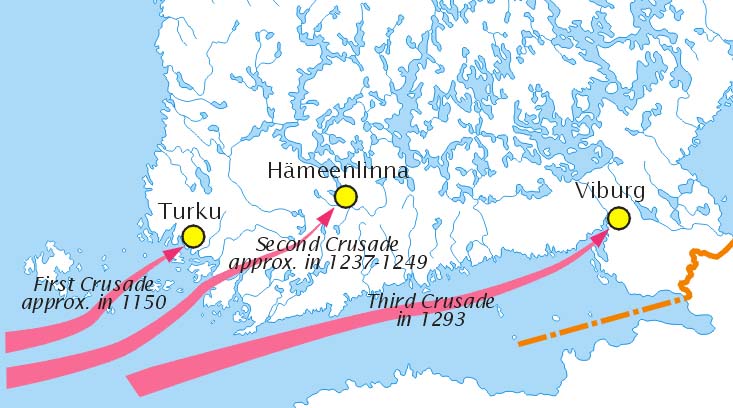
The Third Swedish Crusade to Finland was a Swedish military expedition against the pagan Karelians in 1293. It followed the First Crusade and the Second Crusade to Finland. As the result of the attack, Viborg Castle was established and western Karelia remained under Swedish rule for over 400 years. The name of the expedition is largely unhistorical, and it was a part of the Northern Crusades.

Kolmas ristiretki Suomeen

According to Eric Chronicles, the reason behind the expedition was pagan intrusions into Christian territories. Birger Magnusson's letter of 4 March 1295 states that the motive of the crusade was long-time banditry and looting in the Baltic Sea region by Karelians, and the fact that they had taken Swedes and other travellers as captives and then tortured them. 

Karelians had also been engaged in a destructive expedition to Sweden in 1257 which led Valdemar to request Pope Alexander IV to decleare a crusade against them, which he agreed.
According to Eric Chronicles, Swedes conquered 14 hundreds from the Karelians.

                    Kuvahaun tulos haulle Swedish crusade in karelia
The earliest period of Swedish colonization of Finland proper (in the area around the city of Turku) occurred at the end of the 12th century, and could be considered a part of the religious and political movement known as the Northern Crusade. 
----
The Northern Crusades or Baltic Crusades were religious wars undertaken by Catholic Christian military orders and kingdoms, primarily against the pagan Baltic, Finnic and Western Slavic peoples around the southern and eastern shores of the Baltic Sea, and to a lesser extent also against Orthodox Christian Slavs (East Slavs). The crusades took place mostly in the 12th and 13th centuries and resulted in the subjugation and forced baptism of indigenous peoples.

                     
Viborg Castle, was founded by the swedish in 1293
----
The 12th century is poorly documented in Sweden, and Russian documents are fragmented. From the surviving sources, however, it seems evident that the newly founded republic and Sweden drifted into hostilities that could not be permanently settled ever again.

According to the First Novgorod Chronicle, the Swedish troops attacked the Novgorod merchants somewhere in the Baltic Sea region and killed 150 Novgorodians in 1142. It is the first known case of hostilities between Sweden and Novgorod. In 1164, a strong Swedish fleet approached Ladoga but was soundly defeated with most of its ships captured by Novgorod.

According to Swedish sources, the Novgorodians and their Karelian allies launched pirate raids against mainland Sweden during the 12th century. During one of such raid, they brought to Novgorod the doors of the Sigtuna cathedral as loot. 


In the eyes of the northern crusaders, such actions justified war against Novgorod, although Novgorodian sources do not mention these events. Swedish sources refer to the attackers of Sigtuna as "heathens". Swedish sources also document that Jon jarl spent nine years fighting against Novgorodians and Ingrians at the end of the 12th century. These expeditions are not documented in Russian sources

27.8.2017

Early Finnish saga 7. - and Land of Novgorod

The final known conflict between Yem (Finns) and Novgorod took place in the 1220s, following decades of peace, at least in the chronicles. After having secured his power in Novgorod by 1222, Grand Prince Yaroslav II of Vladimir organized a series of attacks against Estonia, Yem and Karelia. The offensive against Yem took place in winter 1226–27.

Нов город = Nov gorod = New burgh / town   Veliky Novgorod = Great Novgorod

                                     
Yaroslav II of Vladimir, who according to the Novgorod First Chronicle campaigned against the Finns in 1226 and 1228 and repelled their counter-campaign in 1228.

The same winter Yaroslav, son of Vsevolod left Novgorod over the sea against Yem where no else Russian prince had been able to dwell; and he conquered the land and returned to Novgorod praising God with many prisoners. When those who were accompanying him could not handle all the prisoners, they killed some of them but released many more.


The Yem retaliatory expedition in summer 1228 against Ladoga, allegedly with more than 2000 men ended in disaster, as described by the Novgorod First Chronicle.

          
                                13th-century Novgorod as represented

                                
The bailiff of Ladoga castle (here in its 15th-century appearance) repelled the Yem forces in 1228.
The Yem came to Lake Ladoga to war, and word about that came to Novgorod on the Ascension Day of the Christ (6.8). And Novgorodians took their barges and rowed to Ladoga with prince Jaroslav. Vladislav, the bailiff at Ladoga, and the people of Ladoga did not wait for the Novgorodians, but went after them (Finns) in boats where they were fighting, met with them and fought them; and then came night, and they (people of Ladoga) landed on an island, but Finns were on the coast with prisoners, for they had been fighting close to the lake near the landing place, and in Olonets.

The same night they asked for peace, but the bailiff and the people of Ladoga did not grant it; and they killed all the prisoners and ran into forests, after abandoning their ships. Many of them fell there, but their boats were burned. And of those who had come, 2000 or more were killed, God knows; and the rest (who had not fled) were all killed.

                      
                                 The marketplace in Novgorod

The war seems to have been the end of independent Yem-Novgorodian conflicts. Based on Papal letters from 1229, the unknown Bishop of Finland took advantage of the chaotic situation by taking over non-Christian places of worship and moving the see to a "more suitable" location. On the bishop's request, the Pope also enforced a trade embargo against Novgorodians on the Baltic Sea, at least in Visby, Riga and Lübeck. A few years later, the Pope also requested the Livonian Brothers of the Sword send troops to protect Finland. Whether any knights ever arrived remains unknown.

Novgorodian wars were a factor contributing to the eventual Swedish conquest of Finland around 1249. 
Under Swedish rule, the wars continued to rage in Finland as a part of Swedish-Novgorodian Wars.
-----------------
Throughout the Middle Ages, the city thrived culturally. A large number of birch bark letters have been unearthed in excavations, perhaps suggesting widespread literacy, although this is uncertain (some scholars suggest that a clerical or scribal elite wrote them on behalf of a largely illiterate populace). It was in Novgorod that the Novgorod Codex, the oldest Slavic book written north of Bulgaria, and the oldest inscription in a Finnic language (Birch bark letter no. 292) were unearthed. Some of the most ancient Russian chronicles (Novgorod First Chronicle) were written in the scriptorium of the archbishops who also promoted iconography and patronized church construction. The Novgorod merchant Sadko became a popular hero of Russian folklore.

                     
          Martha the Mayoress at the Destruction of the Novgorod Veche

Novgorod was never conquered by the Mongols during the Mongol invasion of Rus. The Mongol army turned back about 200 kilometers (120 mi) from the city, not because of the city's strength, but probably because the Mongol commanders did not want to get bogged down in the marshlands surrounding the city. However, the grand princes of Moscow, who acted as tax collectors for the khans of the Golden Horde, did collect tribute in Novgorod, most notably Yuriy Danilovich and his brother, Ivan Kalita

In 1259, Hordes tax-collectors and census-takers arrived in the city, leading to political disturbances and forcing Alexander Nevsky to punish a number of town officials (he cut off their noses) for defying him as Grand Prince of Vladimir (soon to be the khan's tax-collector in Russia) and his Mongol overlords. In the 14th century, raids by Novgorod pirates, or ushkuiniki, sowed fear as far as Kazan and Astrakhan, assisting Novgorod in wars with the Grand Duchy of Moscow.
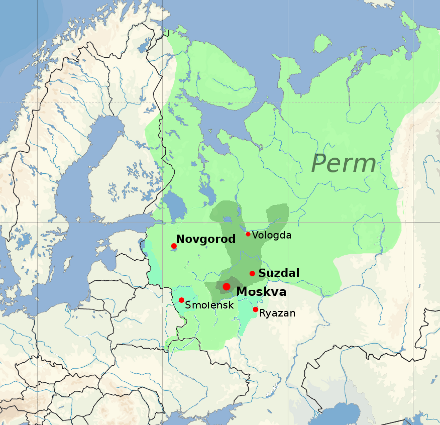
                    Kuvahaun tulos haulle state novgorod map
During the era of Old Rus' State, Novgorod was a trade hub at the northern end of both the Volga trade route and the "route from the Varangians to the Greeks" along the Dnieper river system. A vast array of goods were transported along these routes and exchanged with local Novgorod merchants and other traders. The farmers of Gotland retained the Saint Olof trading house well into the 12th century. Later German merchantmen also established tradinghouses in Novgorod. Scandinavian royalty would intermarry with Russian princes and princesses.


After the great schism, Novgorod struggled from the beginning of the 13th century against Swedish, Danish, and German crusaders. During the Swedish-Novgorodian Wars, the Swedes invaded lands where some of the population had earlier paid tribute to Novgorod. The Germans had been trying to conquer the Baltic region since the late 12th century. Novgorod went to war 26 times with Sweden and 11 times with the Livonian Brothers of the Sword. 

The German knights, along with Danish and Swedish feudal lords, launched a series of uncoordinated attacks in 1240–1242. Novgorodian sources mention that a Swedish army was defeated in the Battle of the Neva in 1240. The Baltic German campaigns ended in failure after the Battle on the Ice in 1242. After the foundation of the castle of Viborg in 1293 the Swedes gained a foothold in Karelia. 

On August 12, 1323, Sweden and Novgorod signed the Treaty of Nöteborg, regulating their border for the first time.
-----------------------------
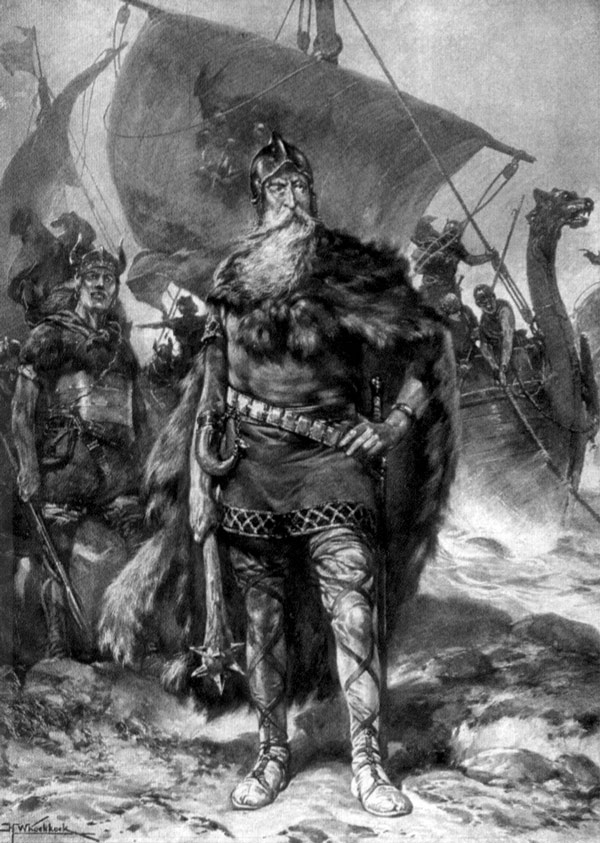
In 882, Rurik's successor, Oleg of Novgorod, conquered Kiev and founded the state of Kievan Rus'. Novgorod's size as well as its political, economic, and cultural influence made it the second most important city in Kievan Rus'. According to a custom, the elder son and heir of the ruling Kievan monarch was sent to rule Novgorod even as a minor. When the ruling monarch had no such son, Novgorod was governed by posadniks, such as the legendary Gostomysl, Dobrynya, Konstantin, and Ostromir.
Of all their princes, Novgorodians most cherished the memory of Yaroslav the Wise, who sat as Prince of Novgorod from 1010 to 1019, while his father, Vladimir the Great, was a prince in Kiev. 

Yaroslav promulgated the first written code of laws (later incorporated into Russkaya Pravda) among the Eastern Slavs and is said to have granted the city a number of freedoms or privileges, which they often referred to in later centuries as precedents in their relations with other princes. His son, Vladimir, sponsored construction of the great St. Sophia Cathedral, more accurately translated as the Cathedral of Holy Wisdom, which stands to this day.
Saint Sophia Cathedral
---------
In Norse sagas the city is mentioned as the capital of Gardariki. Four Viking kings - Olaf I of Norway, Olaf II of Norway, Magnus I of Norway, and Harald Hardrada - sought refuge in Novgorod from enemies at home. No more than a few decades after the 1030 death and subsequent canonization of Olaf II of Norway, the city's community had erected in his memory Saint Olaf's Church in Novgorod.


The Gotland town of Visby functioned as the leading trading center in the Baltic before the Hansa League. At Novgorod in 1080, Visby merchants established a trading post which they named Gutagard (also known as Gotenhof). Later, in the first half of the 13th century, merchants from northern Germany also established their own trading station in Novgorod, known as Peterhof. At about the same time, in 1229, German merchants at Novgorod were granted certain privileges, which made their position more secure
----------
In 1136, the Novgorodians dismissed their prince Vsevolod Mstislavich. 
Vsevolod of Pskov

The year is seen as the traditional beginning of the Novgorod Republic. The city was able to invite and dismiss a number of princes over the next two centuries, but the princely office was never abolished and powerful princes, such as Alexander Nevsky, could assert their will in the city regardless of what Novgorodians said. The city state controlled most of Europe's northeast, from lands east of today's Estonia to the Ural Mountains, making it one of the largest states in medieval Europe, although much of the territory north and east of Lakes Ladoga and Onega was sparsely populated and never organized politically.


One of the most important local figures in Novgorod was the posadnik, or mayor, an official elected by the public assembly (called the Veche) from among the city's boyarstvo, or aristocracy. The tysyatsky, or "thousandman", originally the head of the town militia but later a commercial and judicial official, was also elected by the Veche. Another important local official was the Archbishop of Novgorod who shared power with the boyars. Archbishops were elected by the Veche or by the drawing of lots, and after their election, were sent to the metropolitan for consecration.

While a basic outline of the various officials and the Veche can be drawn up, the city-state's exact political constitution remains unknown. The boyars and the archbishop ruled the city together, although where one official's power ended and another's began is uncertain. The prince, although his power was reduced from around the middle of the 12th century, was represented by his namestnik, or lieutenant, and still played important roles as a military commander, legislator and jurist. The exact composition of the Veche, too, is uncertain, with some historians, such as Vasily Klyuchevsky, claiming it was democratic in nature, while later scholars, such as Marxists Valentin Ianin and Aleksandr Khoroshev, see it as a "sham democracy" controlled by the ruling elite.

                     
In the 13th century, Novgorod, while not a member of the Hanseatic League, was the easternmost kontor, or entrepôt, of the league, being the source of enormous quantities of luxury (sable, ermine, fox, marmot) and non-luxury furs (squirrel pelts).
--------

26.8.2017

Early Finnish saga 6. / Second Swedish Crusade

The Second Swedish Crusade was a Swedish military expedition to areas in present-day Finland by Birger Jarl in the 13th century. As a result of the crusade, the Swedish kingdom began to exert influence in western Finland.

According to Eric's Chronicle from ca. 1320-1340, the crusade took place between Birger Jarl getting elevated to the position of jarl in 1248 and the death of King Eric XI of Sweden in 1250. The so-called "Detmar Chronicle" of Lübeck from around 1340 confirms the expedition with a short note that Birger Jarl submitted Finland under Swedish rule. 


From other sources, Birger Jarl is known to have been absent from Sweden in winter 1249-50. Later on, the conquest of Finland was redated to the 1150s by the official Swedish legends, crediting the national saint King Eric for it. The point of time when the attack took place has been somewhat disputed. Attempts have been made to date the attack either to 1239 or to 1256. Neither date has received wide acceptance.
Sweden's sudden determination to take over Finland has not been explained, but for one reason or another Finland was high on Birger Jarl's agenda. 

Finland became an integrated part of Sweden since there was a lot of exchange between the regions, especially via the Åland archipelago. During those days, it was easier to travel by sea than by land. Birger Jarl seems to have headed for Finland just after having both crushed the Folkung uprising of 1247-1248 and finalized the Treaty of Lödöse with Norway earlier in the summer of 1249.


Sweden's previous attempts to gain a foothold in Estonia in 1220 may have urged Sweden to settle for what was still available. Eric's Chronicle also points out the threat from Russians, mentioning that the "Russian king" had now lost the conquered land.

All details of the crusade are from Eric's Chronicle, which is largely propagandist in nature, written amidst internal unrest and war against Novgorod. The chronicle has caused a long controversy on the actual target of the expedition, since it presents Tavastians (taffwesta) as the Swedish opponents. Based on this, it is usually assumed that the target of the crusade was also Tavastia, even though that is not explicitly said in the chronicle. Tavastians are known to have rebelled against the church in the 1230s, which had resulted in a papal demand for a crusade against them in a letter in 1237.

According to the chronicle, the expedition was prepared in Sweden and then conducted over sea to a land on the coast, where the enemy was waiting. Since Tavastia was inland, this contradiction was later explained so that there was a Tavastian port somewhere on the coast that was the primary target of the attack.

                     
                                    Taffesta borg = Häme Castle

                       
                                                        1850 Häme Castle

Chronicle also mentions that a castle called "taffwesta borg" was established after the war. There have been lot of attempts to identify the castle with either Häme Castle or Hakoinen Castle in central Tavastia, but neither has been indisputably dated to such an early period. The first Swedish garrisons in Finland seem to have been in a hill fort later called as "Old Castle of Lieto", not far from Turku and Koroinen, the fortified church-residence of the early bishops, along the Oxen Way to central Tavastia.
                    Tavastehus slott
                                Taffesta Borg / Tavastia Castle

Probably related to preventing other parties from getting involved in the conflict, Pope Innocent IV took Finland under his special protection in August 1249, however without mentioning Sweden in any way. Finland's bishop Thomas, probably a Dominican monk, had resigned already in 1245 and died three years later in a Dominican convent in Gotland. The seat being vacant, the diocese had probably been under the direct command of the papal legate William of Modena whose last orders to Finnish priests were given in June, 1248.

Swedish Bero was eventually appointed as the new bishop in 1248/9, presumably soon after William's visit to Sweden for an important church meeting at Skänninge that ended on March 1, 1248. The so-called "Palmsköld booklet" from 1448 noted that it was Bero who gave Finns' tax to the Swedish king. Bero came directly from the Swedish court like his two successors. It seems that Swedish bishops also held all secular power in Finland until the 1280s when the position of the Duke of Finland was established
In 1249, the situation was also seen clear enough to have the first Dominican convent established in Finland. There had been no monasteries in Finland before that. The convent was situated next to the bishop's fortification in Koroinen until the end of the century.

As an unexpected side effect, the expedition seems to have cost Birger the Swedish crown. As King Eric died in 1250 and Birger was still absent from Sweden, the rebellious Swedish lords selected Birger's under-aged son Valdemar as the new king instead of the powerful jarl himself.

Tavastia (historical province)

From 1249 onwards, sources generally regard Finland proper and Tavastia as a part of Sweden. Diocese of Finland proper is first time listed among the Swedish dioceses in 1253. In the Novgorod First Chronicle Tavastians (yem) and Finns proper (sum) are mentioned on an expedition with Swedes (svei) in 1256. However, very little is known about the situation in Finland during the following decades. Reason for this is partly the fact that Western Finland was now ruled from Turku and most of the documentation remained there. 

As the Novgorod forces burned the city in 1318 during the Swedish-Novgorodian Wars, very little remained about what had happened in the previous century. 
The last Swedish Crusade to Finland took place in 1293 against Karelians.

24.8.2017

Early Finnish saga 5.

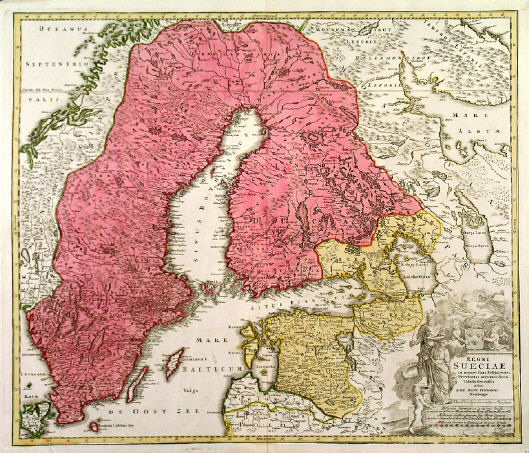
Swedish–Novgorodian Wars were a series of conflicts in the 12th and 13th centuries between the Republic of Novgorod and medieval Sweden over control of the Gulf of Finland, an area vital to the Hanseatic League and part of the Varangian-Byzantine trade route. 

The Swedish attacks against Orthodox Russians had religious overtones, but before the 14th century there is no knowledge of official crusade bulls issued by the pope.


Scandinavians maintained trade relations and other links with Novgorod from the Viking Age onwards. Merchants from Gotland operated both their own trading house (Gutagård) and the St. Olof church in Novgorod. 

Scandinavians also carried out isolated raids on Novgorod. Eiríkr Hákonarson raided Ladoga in 997, and his brother Sveinn Hákonarson followed suit in 1015. After the marriage of Yaroslav I (Grand Prince of Novgorod and Kiev) to Ingegerd of Sweden in 1019, Ladoga became a jarldom in the orbit of Kievan Rus. 

Eirikr Hakonarson
---------------------------------
Ragnvald Ulfsson 

The major turning point into more permanent conflict between Sweden and Novgorod arrived with Sweden's firmer organization into the Catholic Church in the 12th century and papal involvement in crusades against lands controlled by the Orthodox Church.

It was ruled by Ragnvald Ulfsson, the alleged father of King Stenkil of Sweden (reigned 1060-1066). Dynastic marriages took place between Russian and Scandinavian royal families - for example, in the 1090s Stenkil's granddaughter Christina married Mstislav of Novgorod, upon whose death in 1132 Novgorod seceded from Kievan Rus.
--------------

Apart from Ladoga, Novgorodian interests clashed with Sweden's in Finland, a country which Russian forces sacked on numerous occasions from the 11th century onward. The raid in the winter of 1226-1227 led to heavy losses on the Finnish side.

A Finnish retaliatory raid against Ladoga in 1228 ended in defeat, contributing to the Finns' subjugation by the Catholic Swedes during the Second Swedish Crusade in 1249. Seven years later, the Novgorodians devastated Swedish Finland again.


In 1293 the Swedes won a part of western Karelia and built the fortress of Viborg (Russian: Vyborg) there. This expedition has traditionally been dubbed as the Third Swedish Crusade. Seven years later, they founded the fortress of Landskrona in the mouth of the Neva, on the river Okhta, and ruined the Novgorod settlements on the Neva. Later that year, the Novgorod troops retaliated by destroying Landskrona.

In the early 14th century, military tensions escalated and the two powers were continually at war. In 1311, the Novgorodians devastated central Finland, where the Swedes had recently built a new castle. In response, a Swedish fleet embarked towards Ladoga and set that trade emporium on fire. Three years later, the Karelians' discontent with Novgorod's rule broke out into the open, as they killed Russian governors and sought help in Sweden. After several months of hostilities, Karelia submitted to Novgorod's authority again.

In 1318 Novgorod attacked Turku in southwestern Finland, burning the city and the cathedral as well as the episcopal castle in Kuusisto Castle. Four years later, they besieged Viborg and founded Oreshek, an important fortress dominating the entrance to Lake Ladoga.

23.8.2017

Early Finnish saga 4.

The First Swedish Crusade was a possibly mythical military expedition around 1150 that has traditionally been seen as the first attempt of Sweden to convert pagan Finns to Christianity by force. According to the legend, the crusade was conducted by King Eric IX of Sweden. English bishop Henry of Uppsala accompanied him and remained in Finland. He was later killed at lake Köyliönjärvi by Lalli.

                      
Eric IX of Sweden and bishop Henry en route to Finland. Late mediaeval depicion from Uppland
----------------------------------------------

                                  Kuvahaun tulos haulle henrik bishop


Aiheeseen liittyvä kuva

----------------------------                               
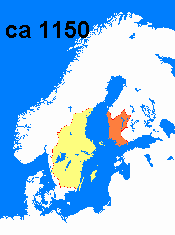
Academics debate whether this crusade actually took place. No archaeological data give any support for it, and no surviving written source describes Finland under Swedish rule before the end of the 1240s. Furthermore, the diocese and bishop of Finland are not listed among their Swedish counterparts before the 1250s. Also, the christianisation of the South-western part of Finland is known to have already started in 10th century, and in the 12th century, the area was probably almost entirely christian.


Kuvahaun tulos haulle first crusade in finlandAt the time, leading the leiðangr was the responsibility of the jarl. This gave rise to a theory that Eric conducted the expedition before he became king or pretender to the throne. Legends give no year for the expedition, and attempts to date it to an exact year in the 1150s are all much later speculations. All that is known about King Eric and Bishop Henry is that they most probably held important positions in Sweden some time in the mid-12th century.

The Swedish bishop normally involved in the eastern campaigns was the Bishop of Linköping, not the Bishop of Uppsala.

The first Swedish crusade in Finland conquers the western parts of the country. The crusade may have been preceded by colonisation.


Kuvahaun tulos haulle first crusade in finlandThe mid-12th century was a very violent time in the northern Baltic sea, with Finnish tribes such as Tavastians and Karelians as well as Swedes in frequent conflicts with Novgorod and with each other. The First Novgorod Chronicle tells that in 1142 a Swedish "prince" and bishop accompanied by a fleet of 60 ships plundered just three Novgorodian merchant vessels somewhere "on the other side of the sea", obviously being after something more important.